What Europeans can Learn from Australians
Hi dear readers,
ℹ️
Some of you, especially those with dynamic electricity tariffs, might have noticed already: the price of power is going through the roof these days in large parts of Europe. Especially in the evening the so called airco peak is pushing electricity prices to record levels. This is quite strange as solar production is expanding at a fast clip and the newspapers are full of stories about our grid getting flooded with too much electricity. What's going on and how could we as individuals learn from the Aussies down under?
💡
Let's first start with the obvious, Europe is doing great when it comes to solar power. There is actually so much of the stuff flooding the grid that prices are often pushed down to or below zero. Especially in springtime when temperatures are mild and heating or cooling demand is low, there is just not enough demand to soak up all the energy hitting the grid. On the other hand this hot summer is pushing up consumption of electricity for cooling, often exactly when the sun is losing its power. The so-called duck curve, the graph produced by the traditional daily evolution of electricity prices, is showing an increasing spread between electricity costs during the day and in the evening. Let's take Germany as an example. In 2026 the price difference between the afternoon and evening peak is almost €0.19 per kwh, up from an average of €0.12 during 2023-2025. The conclusion is pretty clear, the race between construction of green production and storage is being won by the first, especially solar. The good news is as always that the best solution to high prices are high prices. With these spreads the business case for anyone who has the possibility to buffer some energy during a couple of hours becomes very interesting. That includes drivers of electric cars with a vehicle to grid setup. Fill it up after lunch and dump some kwh's on the grid in the evening and you are looking at hundreds of Euros of profit every year.
💡
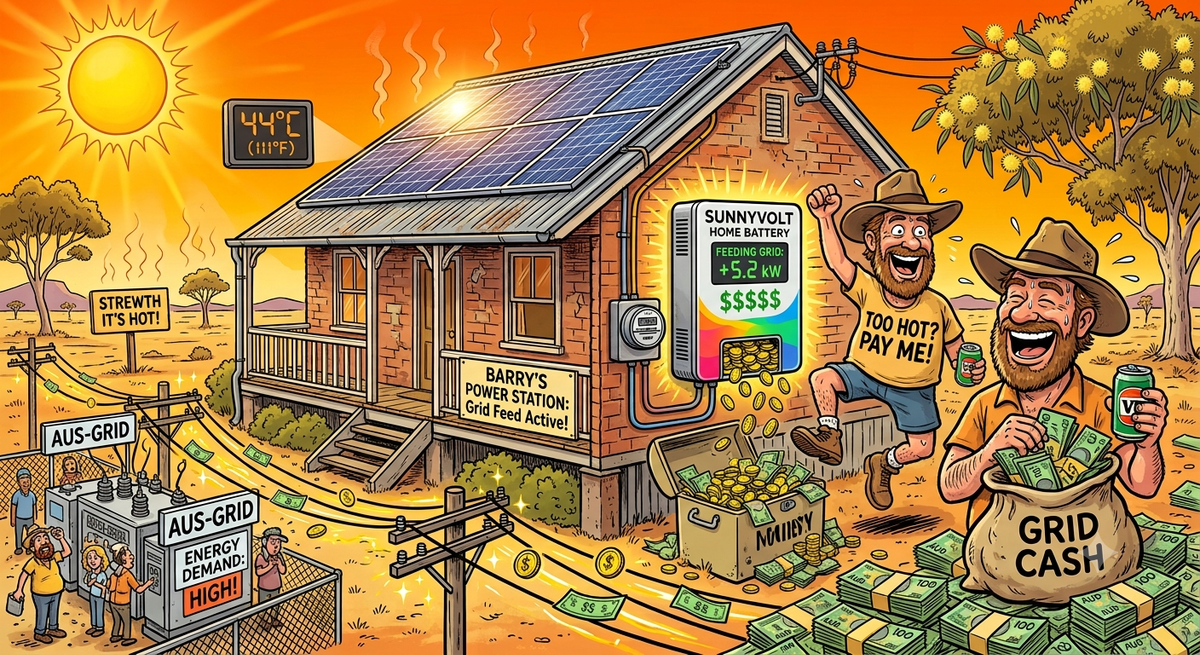
To get a feel of how things might play out you can always turn to Australia. Down under they have been trying to cope with a surplus of solar power for quite a bit longer and are further along in trying to deal with it. One of the government-driven solutions is simple, retailers of electricity are mandated by law to provide three hours of free, YES FREE, electricity to the owners of a smart meter in three states starting this month. This way they hope to incentivize consumers to switch as much consumption to the window of plenty. Besides this relatively rough and broad mandate by the government, the market is also trying to adapt. Australia is seeing a quick uptick of more sophisticated battery driven solutions. For those Aussies who install, an also government supported, battery solution at home, there are now ways to make a quick return on their investment with a bit of day-trading. On the hottest days the energy stored in a home battery can be worth many dollars instead of cents per kwh, allowing some to make more than $100 per evening.
💡
Before you start investing in a lot of expensive hardware to play the arbitrage game you have to be warned though! As more players, big and small, get into the storage business the price differences are coming down. This is already happening in Australia. Make sure you get your investment paid back as quickly as you can, the margin you make afterwards is pure profit.
Grtz
Pieter
PS: If you think this newsletter could interest someone you know, please forward this email. They can sign up for free on this link.