State of Autonomy: Q4 2025
Hello dear Wonderers,
Waymo Everywhere!
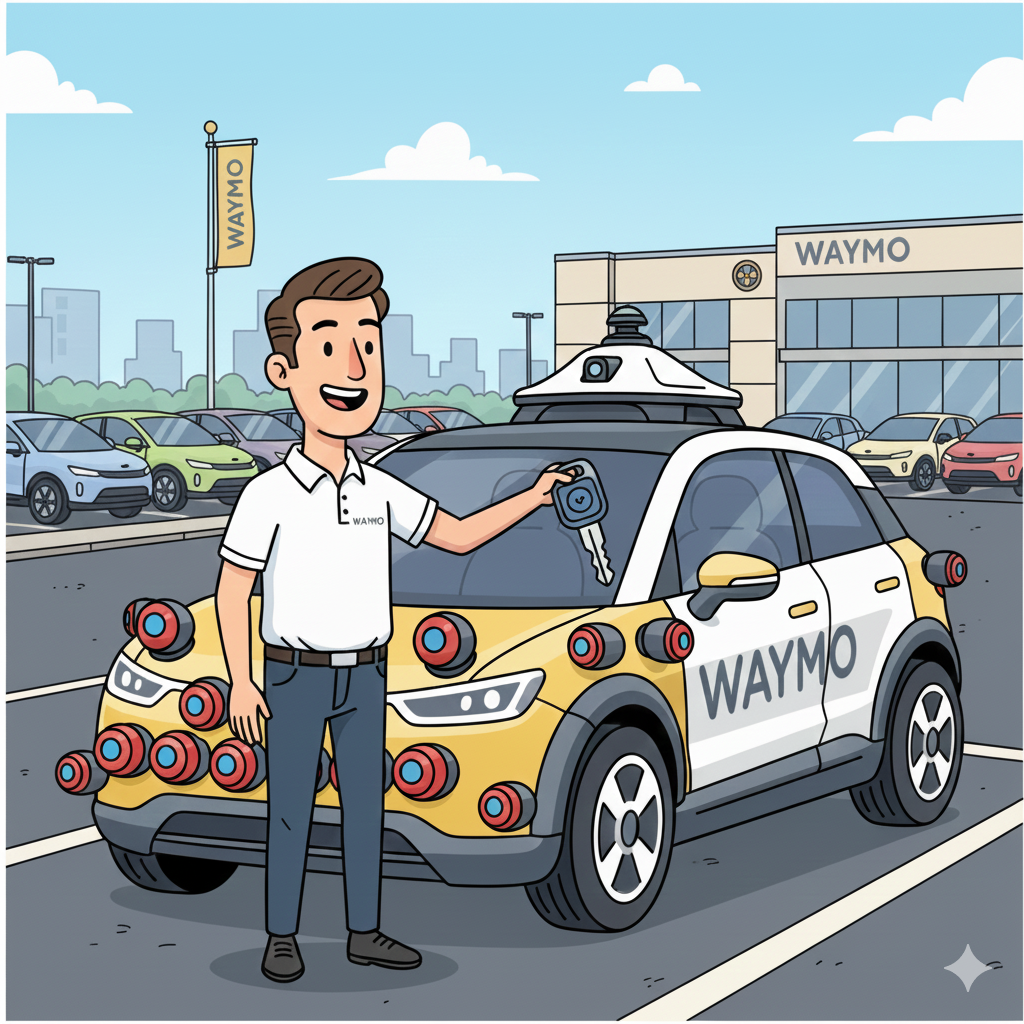
There is no escaping the American company, whatever newspaper or magazine you open or link you clic on, there they are! While their cars might not be available everywhere yet, their communications department is clearly doing overtime.
Let's start with the easy stuff, which cities will they be targeting next? The list is getting ridiculously long: New Orleans, Tampa, Minneapolis, Las Vegas, San Diego, Detroit, Seattle, Denver, San José airport, Washington, Nashville (with Lyft) and London. Especially that last one is pretty exciting as it means Europe is finally getting its first taste of driverless magic from the Alphabet company.
The cars will not just be running around busy city roads either as Waymo is now the first autonomous taxi provider to use freeways, or highways if you prefer. Starting in cities where they have tons of experience like San Francisco and Phoenix, you can now expect your ride to truly take the fastest route to your destination. This should provide for a welcome improvement of the service as the company was seriously hampered in its competition with good old human piloted cars. The move also shows Waymo to be at least one step ahead of the competition as no other provider, in the US or China, is currently offering highway rides without a safety driver in the car.
The fast clip at which the company is improving its footprint and technical capabilities has one wondering: could you have your very own autonomous robocar some day? Because let's face it, human nature is what it is and outright owning your set of wheels is deeply ingrained into our psyche as the ultimate form of freedom. Waymo has confirmed that personal car ownership is definitely something they are working towards! Rough estimates put the cost at a steep $250.000 dollars though, so don't start saving up just yet.
Everyone (still) Getting Into bed With Everyone Else
The game is still very much on in the world of driverless vehicles. Given the enormous investment that has to be made, there is a huge appetite to collaborate. One clear trend is becoming clear: ride hailing players and the tech crowd are increasingly leaning on each other to make sure they don't miss their ride (pun intended;-)) to the future. Every month there are new partnerships being announced. As mentioned above, Lyft and Waymo will be heading to Nashville, Grab has announced an investment in Weride and here in Europe Bolt just indicated that they will be teaming up with Pony.ai. The list makes clear that on the technology side of the equation Europe is ceding the game to Chinese or American tech giants. I can already see the headlines 5-10 years from now lamenting how others are in a position to control our destiny.
One Metric to Dominate them all: Occupation Rates Baby
One name not mentioned above is the granddaddy of ride hailing itself, Uber. Don't worry though, they have plenty of stamps on their dance card already. They might actually be ahead of the game, revealing that they will have more than 10 cities where you can opt for an autonomous vehicle by the end of 2026. They are also quite transparant that there is no clear path to profitability just yet. The most revealing but not unexpected learning is that occupation rates will be the key parameter for future driverless operations. Given the huge expense related to the vehicles in procurement and maintenance, the economics just don't work otherwise. Like so many mobility revolutions before the writing is on the wall for autonomous as well, population density will be key. If you don't see any rental steps or bikes on the streets of your town, chances are slim you will be able to take an autonomous ride any time soon.
Big Tech Looking for a Piece of the Action
I'm writing these lines in the middle of an epic fight on the value of AI investments. Will the valuations of the Nvidia's of this world be worth it or are we looking at a dotcom style hangover? The biggies of the AI boom are not waiting around to find actual use cases to prove their worth. The king itself, Nvidia, announced an ambitious partnership with Uber, Stellantis and Foxconn to bring 100.000 autonomous level 4 vehicles on the road by 2027. Building on the respective strengths of the partners they are looking to make the leap from thousands to hundreds of thousands using two Stellantis platforms and Nvidia's suite of AI solutions.
It should be no surprise that Nvidia is pushing so hard on the autonomous button. Dominating the future tech space in this field is by no means a given. Waymo has built up a serious lead with a pretty full suite of its own and quite a few car companies with tech roots like Tesla and Xpeng are building their own automated driving chips. To make matters even more competitive there are other players looking for a payday with strong contenders like Mobileye and Quallcomm in the running. That last one announced a partnership of its own during the IAA as its Snapdragon Ride Pilot automated driving system is available in the brand new BMW iX3. This intense battle is very much worth it to keep an eye on!
GM is Back!
A quick trip back into the recent past. Up until 2023 GM's Cruise division was a serious contender for the lead in autonomous vehicles. Then a serious accident with one of their vehicles, and probably quite a bit of political infighting, put an end to the dream. Finally GM completely shuttered the entity and fired a large portion of the employees. That doesn't mean they are out of the game completely though. Recent news has them firmly in that other camp of AV, just like BMW and Mercedes, focusing on an organic evolution towards fully autonomous privately owned cars. Isn't it fun to see how the strategic waves keep crashing over each other!
Will the Robotaxi Kill the Cabbie Profession?
Quite a lot of folks see the growth and success of autonomous vehicles in cities like San Francisco as a seriously bad omen for the employment provided by the current Ubers of this world. But what do the numbers tell us?
The fear and trepidation seems to be overblown, at least in San Fran's case. First of all, the driverless taxis seem to have increased total demand in the city. It turns out that, for now, autonomous taxi services are actually competition against the privately owned car more than the traditional cab. People prefer to be alone and avoid sitting in a car with someone. This effect is borne out by a drop in owned cars in the area. Secondly, the AVs have cornered an upper segment of the market. Waymo rides are more expensive and slower to get to their destination than traditional cabs, attracting people who have money and time to spend on the experience while probably getting things done in their office on wheels. The less well-off who have to get somewhere to make a living are still waving down a fellow human being.
Grtz
Pieter
PS: If you think this newsletter could interest someone you know, please forward this email. They can sign up for free on this link.