State of Autonomy: Q2 2026
Hi dear readers,
Europe Finally Gets Served
Let's face it my dear readers, working in this industry in Europe is seriously frustrating on the topic of autonomous driving. Devoid of any real tech giants, the continent that invented the car is being left behind. Where San Franciscans have been riding Waymos on a daily basis for two years now, the first European city is still to get served in any meaningful way.
Luckily, things seem to be changing in 2026. While Waymo is known to start service in London in the fall, Uber is continuing to roll out its vast array of partnerships. The newest will be with Rimac and Pony.ai. Logical first step for the trio will be Zagreb in Croatia, the home country of the hyper car builder. First vehicles will not be the Rimac Verne that was presented some time ago, but the more implementation ready Arcfox Alpha T5 from Pony. Over in Madrid the Americans have chosen WeRide as their partners. While starting off this year with a small fleet with safety operators on board, the two companies are aiming to have hundreds of autonomous vehicles available in the Uber app in the future. As both Uber and WeRide are asset light technology companies they are relying on a nuts and bolts operational partner, Avomo, for the boots on the ground stuff.
Xpeng Follows Tesla's Lead
Xpeng is determined to play a serious role in the development of the autonomous future. They have started up the mass-production of their very own Robotaxi. Based on the platform on which their flagship SUV rides. Where the GX is a luxury oriented six seater, the robotaxi will be very passenger oriented with zero gravity seats all around, entertainment screens and privacy glass.
On the technology front this vehicle really stands out as Xpeng is making a determined effort to build as much of the technology as possible in house. The vehicles will thus come with 4 of Xpeng's very own Turing chips that can reach 3.000 tops (Trillion Operations per Second). We'll all have to get used to the new lingo here. Let's just say more tops is better as it expresses the brainpower the vehicle has to make sense of the world around it when navigating our streets in the future. You don't want to rely on their connection to a far-away data center too much now do you?
One of the inputs the chips will not be processing when finding their way is that of a lidar system. Xpeng has solidly chosen the camp of Elon Musk and Tesla on this one, relying only on radar and vision (camera) to collect an image of reality.
From a business case perspective we see a similar reality unfolding as with electrification the last two decades. Do you believe in a multi-purpose or bespoke platform? Xpeng has clearly decided not to pursue the Tesla playbook on this one. Where the American company is putting its money on a dedicated vehicle built from the ground up for robotaxi use, the Chinese tech company is going the frugal way. Putting an existing platform to use will allow the company to write off its investment across the present and the future alike.
Technical Snafus: BYD Gods Eye bit Blind and Apollo Go...not
Even as I'm a real tech optimist, it never hurts to be realistic and report on the flaws of all the new exciting stuff that is happening. In the rush to keep pace and capture all that future potential, car makers might otherwise take things a bit too far too fast. And no, I'm not just talking about Tesla, there are plenty of other examples to be found.
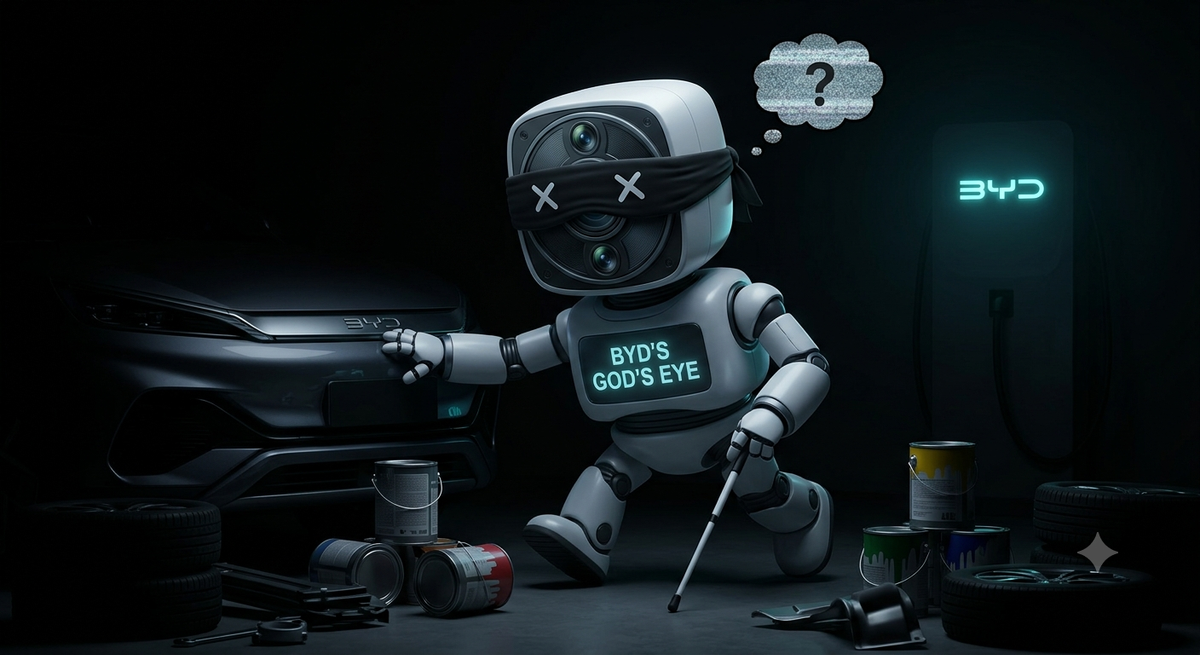
One of the players who is suffering from major backlash on the performance of its driver assistance tech is BYD. Several complaints have surfaced on the downright dangerous performance of its God's eye. BYD made a name for itself when it provided some version of the tech on all of its vehicles, from the 100 K+ luxury lineup to the humble around-towner. The issue seems to be that even drivers of the top-specced cars are reporting instances where the cars veered into oncoming traffic.
Some of you might believe that it's better to rely on fully autonomous vehicles and let normal cars be driven solely by human drivers. You would be smart to keep in mind that these vehicles are also in their very early stages of development. In the city of Wuhan, police were called out when a number of Apollo Go vehicles simply stopped in the middle of sometimes busy expressways, effectively trapping their riders inside. One person was only able to get to safety after two hours and dozens of calls to the customer service line.
Autonomous Driving a Road to Gridlock?
The last few months have made clear that autonomous technology keeps developing on both tracks. With ever more cities around the world rolling out their first driverless robotaxi's and excited Tesla drivers raving about the completely hands-off trips they took, economists and planners are beginning to sound the alarm. Sure, all those autonomous vehicles zipping around metropolitan areas are sometimes replacing trips that would have been taken by private car. Even if they do, they are incurring so-called zombie miles, trips without a passenger, to get to their pickup point.
The real issues will start on the other end of the spectrum though. If personal autonomous mobility breaks through for an acceptable price, chances are people will still want to own their car. Our rides are in the end not just a means of getting from a to b, they are also an expression of identity. Having a means of transportation that allows you to use the time underway for something else will massively increase the number of trips. Love that bigger house in the countryside but always dreaded the longer commute? Well, if you can start your morning mails and calls while underway it might be time to realize that dream. Kids need picking up from school? No problem, just send your AV (autonomous vehicle) and have it circle the block till your loved one makes it out. Tired of shelling out the big bucks for that inner city parking space? Don't stress, just send your car to something cheaper on the outskirts and summon it when you need it. Dreaming of a vacation home beyond the quick back and forth for the weekend range. No worries, get one of those luxury people movers with fully inclined captain's chairs and a cinema screen to drive you up and down on Friday and Sunday evening/night. Endless possibilities will present themselves, except that they will probably drive us straight into mobility armageddon. Prepare for many years of intense discussion on just how to keep things moving.
Another Step in Maturity, Waymo Introduces Tiered Membership
As we move into the next phase of the urban robotaxi roll-out, the business model is showing increasing signs of maturity. Waymo, the leader in the west, is now at a place where it feels comfortable enough to start segmenting its users. For those who are using the service as a default way of getting around their home-town, there is now a Waymo Premier tier. If you fork over $ 30 per month, you can count on a cash back of 10% or more on every ride, get priority pickups, cancel for free up to five times per month and get early access when a new city is launched. As with most loyalty programs the intention of Waymo is clear, and proven. If you have skin in the game with a certain provider, you are certain to put them at the top of your list. For heavy users, the discount probably works in their favor, giving the impression that the extra perks are "for free". You can expect other providers to ramp up similar offerings soon.
The Level 3 Conundrum Continued
Where level 2 automated driving is pushing forward with great strides, level 3 has had a bad year. Tesla is pushing its full FSD product into ever more markets and the German premiums are close behind, showing off very similar tech. But they all share the same characteristic, calling them full self drive doesn't legally make them systems where you can take your mind and attention off the driving and onto something else. However magical it is to stop physically driving your car, mentally and legally you are still in charge. Actual systems where you are able to take your eyes off the road and focus on something else have not made much progress. With both BMW and Mercedes even backtracking instead of advancing in recent months.
There is one exception though! Cadillac bravely announced that they would start testing full level 3 automated driving with their top of the line Escalade IQ. They will start testing with 200 vehicles with the intention to put the service into the market in 2028. Nice of them to keep pressure on the others as a level 3 system is the holy grail for many drivers. Even if limited to certain conditions, like highway driving, getting all that time back for other activities is exactly what would make it worth quite a bit of money.
Grtz
Pieter
PS: As always, if you like what you are reading above, don't be shy and share. Signing up can easily be done on the link below.