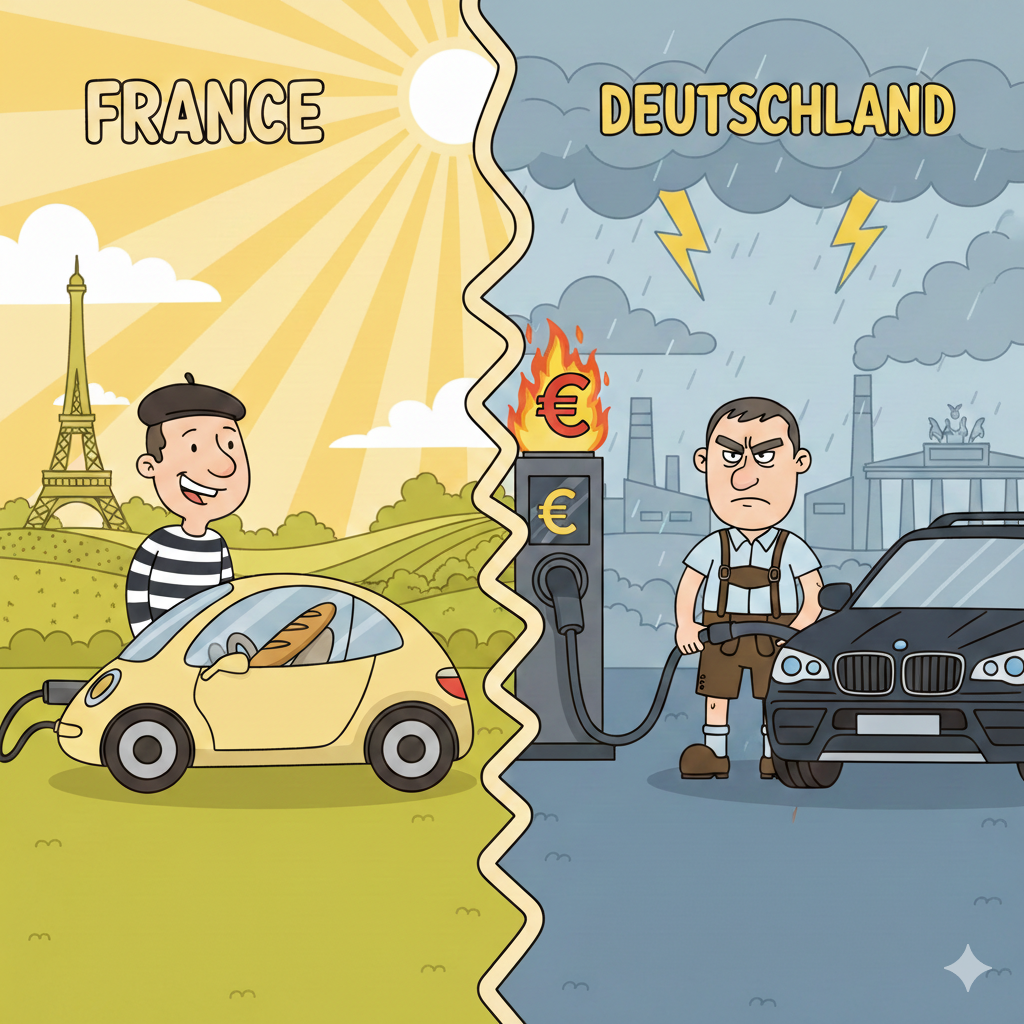
France 1 - Germany 0
Hello dear Wonder Friends,
ℹ️
As our vehicle park electrifies, European sales of full EVs were almost at 20% in January, the difference in electricity prices will start playing an increasingly important role in mobility. Decisions from decades ago are suddenly impacting just how expensive it is to get from A to B. For the moment France seems to have made some more intelligent choices than their neighbors to the east.
💡
The two countries could not have run a different course when it comes to energy production. Germany said goodbye to their last nuclear power plant in 2023 to focus, admirably, on their "Energiewende". This plan entails a heavy focus on renewables with gas as the bridge technology of choice. France is famously getting more than 60% of its power from nuclear plants, while only reluctantly ramping up wind and solar. For example: offshore wind production in Germany is six times higher with a smaller potential shoreline than France.
💡
The decision to go all-in on renewables and favoring environmental targets over energy security, and cost, is now beginning to bite the Germans in the behind. As the buildout of gas fired power plants is stacking up delays, the biggest economy of Europe faces a shortfall of 10 to 24 gigawatts of production in 2030. To add insult to injury these problems will force the country into relying much longer on, very dirty, coal to cover the gaps.
💡
For drivers of electrified vehicles these evolutions will also impact the total cost of ownership. Price differences in year-ahead contracts between France and Germany have risen to almost €40 per megawatt-hour, or a cool €0,04 per kwh. Your average driver who covers 20K km per year is looking at €150-200 of cost difference depending on which side of the Rhine they live on.
🔗
Bloomberg article with more info.
Grtz
Pieter
PS: As always, if you like what you are reading above, don't be shy and share. Signing up can easily be done on the link below.