Coverage Denied
Hello dear Wonderers,
ℹ️
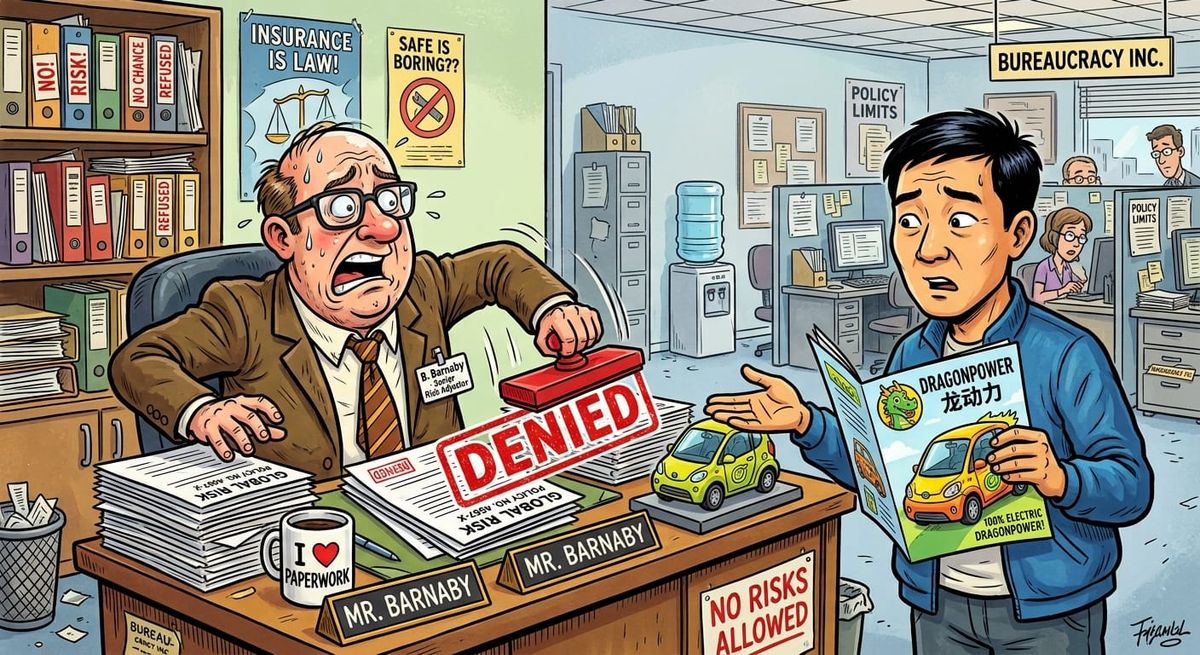
What has been known for a while in expert quarters, has now spilled onto the streets. A big Dutch insurance company is no longer willing to insure a great number of new, mostly electric, vehicle brands.
💡
What's this about? European Chauvinism at its worst? Actually, it's a story of money talking. The work of a car company doesn't end when they have designed, produced and sold the vehicle. They also have to put in tremendous effort to help keep it on the road efficiently. And that's exactly where some Chinese and other brands are failing. In their race to get their aggressively priced and technologically advanced vehicles onto European roads, they have been slow(er) to build up the ecosystem that supports their brands when the rubber hits the streets. Put bluntly: the sell and go to hell mentality.
💡
It's important that Univé, the insurer involved, does not make any value assessment on the products of the manufacturers that are involved. Their main challenge is one of after-sales. With a hyperfocus on the sales apparatus, brands like Voyah, Changan, Jaecoo, Omoda and others are still lagging in the buildout of service and repair centers. Not being able to fall back on a trustworthy, dedicated and trained support network creates a host of problems. Of course there are independent chains out there that are happy to fill the gap, but they can't perform magic. It all starts with two missing ingredients: guidance on how to repair and spare parts. Without detailed guidelines a modern car with all its sensors and a high voltage drive train are virtually impossible to take a crack at. Even if it's only involved in a light fender bender and the experts find the instructions or the courage to attempt a repair, they run into a lack of spare parts that can be delivered in time. This brings back memories of the early days of Tesla, which did have its own dedicated service centers, but still struggled to get simple parts to Europe in a timely fashion. Most longer established players like Tesla itself and BYD or MG are no longer in this position, and as such not touched by Univé's ruling.
💡
All these challenges have an economic cost that quickly adds up. Long transport distances to a certified repair facility where the car then sits on the lot for ages before the right mechanic can be paired to the spare parts quickly turn even the smallest accident into a huge repair bill and unacceptable uncertainties for insurers. They are just not capable of putting an acceptable premium on it. Too low and they have to suffer the loss, too high and they anger their customer. Seems at least Univé has decided that transparency on which brands they want to insure is the smarter choice.
💡
Contrary to what the insurance crowd is aiming for, their decisions do carry unintended consequences. Perfectly great cars that are shunned like that take a big hit in value. Second hand owners are even more focused on the cost of running the vehicle. To avoid stories like these the message for fast moving brands is simple, do your homework. Select, train and certify a sufficiently dense local repair network and make sure you have distribution centers on the continent for the most common spare parts. Once trust has been established, insurers like Univé will gladly accept newer brands. Having them publicly take this position is such a pity as the old truth still stands: trust is gained in drops but lost in buckets.
Grtz
Pieter
PS: If you think this newsletter could interest someone you know, please forward this email. They can sign up for free on this link.