BYD Flashes Tech in Paris
Hi dear readers,
ℹ️
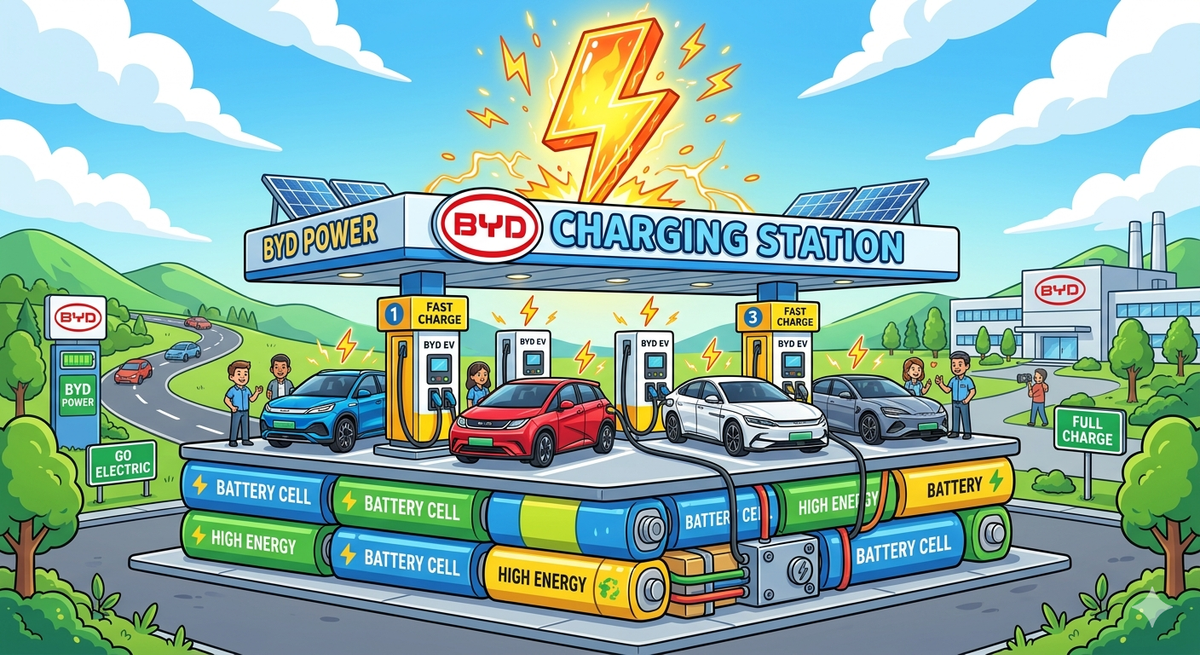
At the beginning of April BYD organized the European launch of the Denza Z9GT in Paris. But forget the car, it was already presented over a year ago, it's the charging update I want to focus on today. BYD gave a lot more information on the European roll-out of its flash charging technology.
💡
What do we know? Well, the newest BYD products that are equipped with the second generation of its Blade battery will support charging powers of up to 1.500 kw! This puts the user experience of the driver very close to filling up at a gas station. Specifically for the Denza Z9GT the battery will go from 10 to 70% in 5 minutes and full (well 97%) in 9. Even in very cold conditions a full charge will only take 12 minutes, just enough to buy a coffee and go to the toilet...if there are no ques at either stop.
💡
Isn't that bad for the battery I can hear you object. Well, as with all high powered charging sessions it is probably a good idea to limit the use of them to when it is absolutely needed. One of BYD's advantages is the use of LFP battery chemistries which are traditionally less prone to degradation anyway. That this choice should limit the energy available in the battery is becoming ever less of an issue as the manufacturer has managed to cram a 122 kwh battery into the Z9, or just as much as Mercedes is able to pack into the renewed EQS with NMC battery cells. With one of these cars there is truly no road trip that is undoable. 400-500 kilometers of real range and then a 5 minute stop for 250-300 more? My stomach is protesting just by writing these lines.
💡
From a technical perspective you can rest easy, BYD will not force you to plug in two charging cables to reach full power as is the case in China. It will be delivered over the standard CCS connector that we are used to. If the Chinese firm succeeds in delivering on its plans, you should also find a charger popping up somewhere near you as they are rumored to target 3.000 charging sites in Europe by 2027. To put that in perspective, that's more sites, if not necessarily plugs, than Tesla and Ionity combined! That sounds incredibly aggressive as we all know that getting grid connections that can handle these loads are increasingly difficult to find. As the second biggest battery producer in the world, BYD has a solution up its sleeve though. They are planning to equip their stations with stationary storage to decrease the strain on the grid. The on-site battery will buffer at a reasonable limit while providing the very high but short bursts needed by the cars. This way of working comes with a warning though. As with any buffering technology you can only take out what is put in. On very busy days the battery is bound to run out of steam and you will be left with the maximum power the grid can provide at that moment. Deciding not to travel with the crowd might still be useful even with this incredible tech.
💡
Will this technology give BYD an insurmountable edge compared to the competition? The answer is probably a bit double. First of all the question is how long it will have this big advance all to itself. Geely announced some impressive technology upgrades only last week with its new 900v platform that will out-flash BYD with 10-70% in 4.22 minutes. The fact that we are beginning to count with seconds instead of minutes brings me to the second reason why the lure of fast charging is fast disappearing. Having taken a road trip or two with a 800v vehicle now that can charge well above 300 kw, I can confirm that the charging stops are no longer all that irritating. For most people the difference between a 5 or a 15 minute stop after three to four hours of hard driving will matter very little. Probably not enough to jump away from their beloved premium European brands towards Denza anyway.
💡
Where the new technology could make a humongous difference is in the 20% special cases. In the LCV space or for people using their cars to pull anything from caravans to dirt bikes, this technology will be a godsent. 5 versus 15 minutes becomes a lot more decisive if you find yourself stopping every 150-200 kilometers. I assume BYD is well aware of this as most renditions of their charging stations are of the drive-trough kind, making it much easier for bigger vehicles or combinations to stop for a top-up. In any case, it is absolutely clear that charging and range on long trips are no longer an excuse for not electrifying.
🔗
BYD media.
Grtz
Pieter
PS: As always, if you like what you are reading above, don't be shy and share. Signing up can easily be done on the link below.