Battery Update Q4 2025
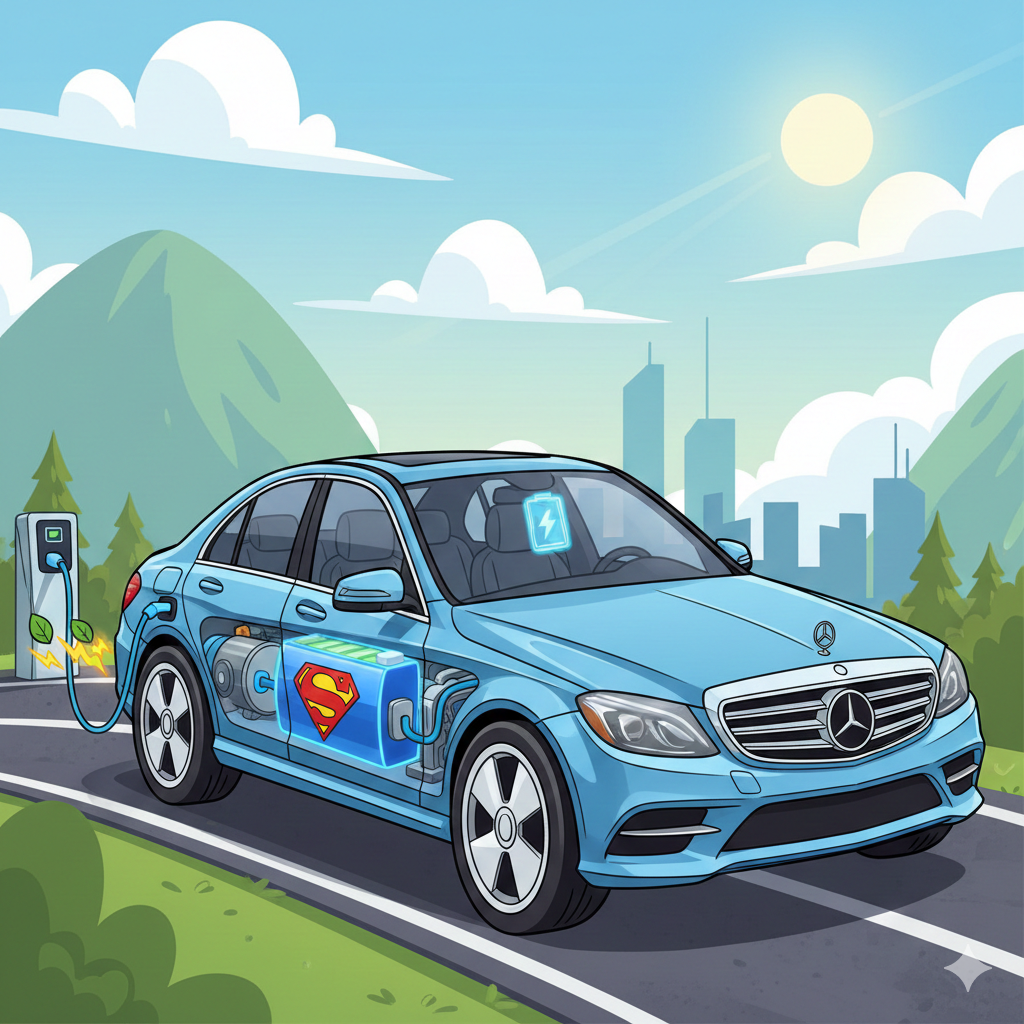
Hello dear readers,
A Solid Future Lies Ahead
Some things don't change. The hottest story on the subject of batteries still revolves around the future of Solid State. A new battery technology where the inner workings are no longer, partially, liquid but made up of sturdier solid material. This step-change should bring such big leaps in safety, durability and energy content that range and charging anxiety can be put in the rearview mirror.
The good news at the end of 2025 seems to be that expectations are not being rolled back. The next few years, and especially 2027/2028 seem to be lining up to be the breakthrough period for Solid State. Dongfeng, one of the original "big 4" Chinese state owned car manufacturers is even promising to launch a car with the technology and over 1.000 km of range in soon to start 2026! As if that is not enough they are also predicting charging powers of 2!! MW on a 1.200 Volt architecture. I'll believe it when I see it, but it's definitely exciting news.
Even if you are not completely on board yet with Chinese speed development promises, you can rest assured that progress is being made. Japanese players like Nissan are hell bent on making up their lost territory and have pilot production lines running on All Solid State Batteries (ASSBs) that promise to double the range and triple the charging power of current battery packs at $ 75 per kwh, solidly below the level of today's packs. They are eyeing a not that far off 2028 to go live in the market. Even if only 2 out of three of those promises are completely on the mark, you are looking at technology that will completely upend the market.
Mercedes PHEV Batteries are Awesome
We tend to focus on fully electric vehicles when we discuss the durability of batteries as Plugin-Hybrids have their combustion engine to fall back on. For a second hand buyer of these hybrid vehicles the state of health of the battery is also crucial however. Without a decent one they might as well shop around for a good old petrol (or Diesel). To make matters worse a battery of a PHEV can have a much higher number of cycles on its dance card than that of a BEV. Some people, including me when I still drove one, charge it up to three times per day.
That's why ADAC put almost 30.000 batteries from plugin-hybrid vehicles that ran 200.000 kilometers through a testing cycle and they were able to determine some very interesting facts. First of all there is the quite obvious reality that batteries of vehicles with a high share of electric are in worse shape than those of drivers who relied on their combustion engine most of the time. In the case of BMW the difference is a whopping 17%, with highly solicited batteries down to 75% SOH after 200K. The Mercedes batteries tell a different story. They are among the worst performers when used lightly, with only 89,5%, but the difference with their cousins who had to put in a lot of work is only negligible at 88%. The use of LFP battery chemistries and big buffers, the A 250e uses only about 11 of its 15,7 kwh for example, is clearly a winning strategy for delivering predictable performance. If you are in the market for a second hand PHEV Benz you can rest assured, whatever fuel type the previous owner preferred, your battery will be ready for many more adventures.
In Batteries we Trust!
As mentioned above the future for super sturdy solid state batteries is looking sunny, but that doesn't mean the current versions are to be ridiculed. Manufacturers are getting ever more confident in their products. BYD is following some other manufacturers like Mercedes (on the EQE) by bumping the warranties to 8 years or 250.000 km, whichever comes first. Currently only in Norway, let's hope they make it a general practice. For most retail customers over 30K km a year is well outside of their yearly driving range, but it is a welcome blanket of security for vehicles coming out of more intensive use in professional fleets. Especially with the European Commission's plans to push corporate fleets to green at a more aggressive pace, any comfort that can be given will help support residual values.
If CATL has anything to do with it, 250.000 km of warranty will be laughable in a few years. Their new Shenxing Pro Long Range and Long Life LFP battery will boast an amazing 1 million kilometers or 12 years of lifespan!
Sometimes a lot is Just too Much
Nio is finding out that bigger is not always better. After just a few hundred units they are stopping the production of the semi-solid 150 kwh battery packs due to lack of demand. There just weren't enough drivers willing to pay the subscription premium for the bigger battery compared to the 75 and 100 kwh options.
This is a first good indication that battery size and range wise we have entered a territory where people are no longer willing to pay a premium for boosting the range of their rides to almost 1.000 km. Whether the Nio crowd in China with a very dense swapping network at their disposal is the best reference can be debated. I'm convinced there is a small but important part of the market that would very much like the option in the future. People that need to tow a boat, caravan or horse trailer on a regular basis will without a doubt be looking forward to the first manufacturers that can get these kinds of energy into their vehicles. As will anyone who likes to cannonball through Germany on their way to the Alps😉.
Enjoy the read and a happy X-mas all!
Pieter
PS: And don't forget! If you know anyone who might be interested in reading some of the information written above, feel free to forward. They can sign up on the button below.