Battery Update Q2 2026
Solid Creeping Closer
The evolution of solid state is the key attention point for any conversation related to batteries in the next 2-3 years.
While a big number of OEMs and suppliers have announced new timelines and pilot program results, the most interesting move might have been made by Suzuki. They recently bought Kanadevia, formerly known as Hitachi Zosen. This is no ordinary startup with big ideas and little real assets. Kanadevia has been researching and developing solid state technology since 2006! So Susuki is actually buying a huge intellectual property portfolio on how to produce solid state. The technologies include a fully liquid-less cell and cutting edge dry manufacturing processes. While we can see this move by Suzuki as a catch-up effort, there is probably also something else at play. Suzuki is a big motorcycle and outdoor engine player. Two areas where the current electric technology has not been super successful. Higher energy densities, better battery stability and all-round sturdiness is exactly what they will need to get interesting products to their customers.
Factorial, the American solid state startup with active involvement from Stellantis and Mercedes-Benz, decided not to wait for a big industrial buyer. They merged with a Spac shell on Nasdaq recently and are therefore risking the public scrutiny of the stock market. All these evolutions point to one thing, positions are being taken and money is changing hands with an increasing momentum.
Both moves also share a similar characteristic, they are both non-Chinese. Japanese and American players are clearly positioning themselves to escape the pull from the almighty battery behemoths like CATL and BYD.
Fast, Faster, Fastest,...Irrelevant?
At some point I will have to decide whether it still makes sense to write updates on charging speeds, but here it goes. As we all know BYD recently presented its Blade 2.0 battery, an LFP powerhouse that can charge at stupendously fast rates. Well, CATL was not going to take that lying down now were they? In the end BYD might have its origins in the battery world, from a size perspective they still play, a very quiet, second fiddle to CATL. Just look up a pie chart of the battery producers in the world and a cool half is this one company.
Their new LFP battery, the Shenxing 3.0, can recharge from 10 to 80% in only 3 minutes and 44 seconds. Worst case scenario, as in "you are stuck at a fast charger in the Alps at -30°C", still gives a recharge time of 10-98% within the 10 minute mark. I mean, seriously, we have arrived then haven't we? If you can combine these charging speeds with ever cheaper batteries and more efficient drive trains there will no longer be talk of charging anxiety. Sure, you will still hope to find an empty charger and enough availability of power, but the actual charging will become just like filling up the car with gasoline or diesel.
Breath Baby Breath!
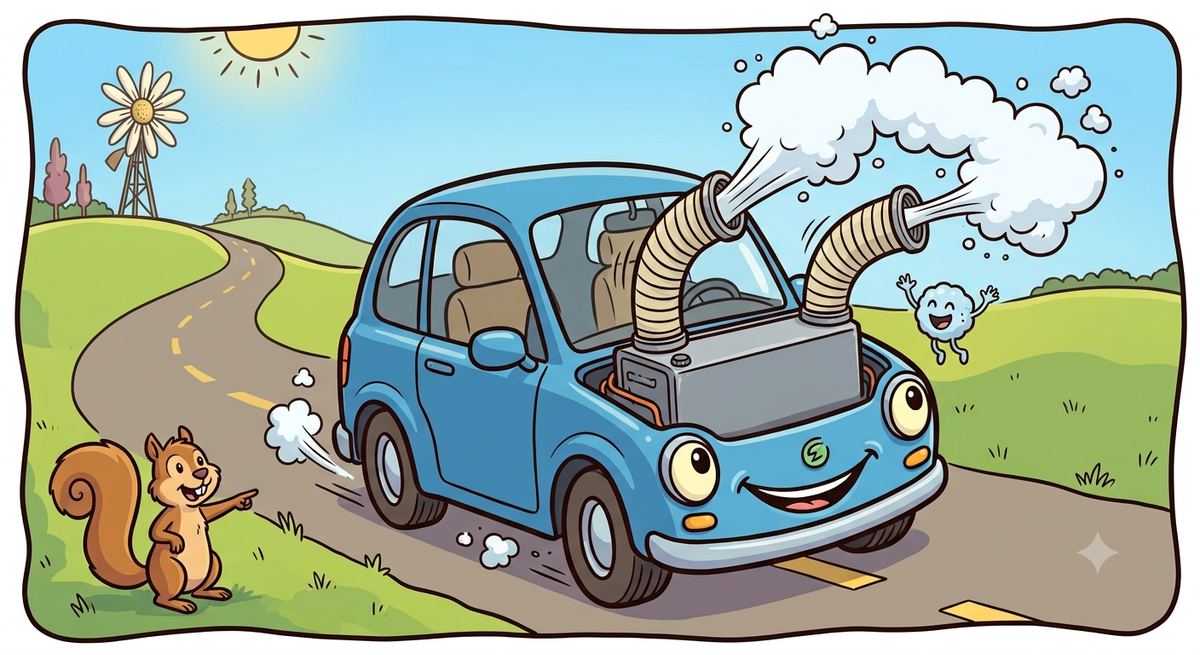
As if the advances mentioned above aren't good news enough, CATL had some other advancements to release to the public. Where the intense research into solid state batteries focuses heavily on the same set of chemicals in a different state, big companies are also still searching for new combinations to improve our energy carriers. One of the avenues that CATL is now openly willing to discuss is their belief in lithium-air batteries. Instead of relying on heavy metals like Nickel of Cobalt, they would literally use oxygen from the air to hold the ions. If it works the weight improvements would be staggering. Instead of 500, maybe with a lot of development, 1.000 wh/kg of future solid state batteries, you could reach theoretical energy densities of 13.000 wh/kg!! That would be competitive with the energy density of gasoline which has a gravimetric density of around 12.000 wh/kg and a volumetric one of 9.000 wh/l.
Now theoretical limits are worthless if you can't turn them into practice. For the moment we are a long way from having breathing batteries in our vehicles. The best laboratory prototypes haven't gotten further than 1.200 wh/kg, still 4-6 times better than current batteries, and have to make their way into real life. But it's interesting to see that we might at one point in the future have the battery technology to take us all the way from Luxembourg to Barcelona without filling up, just like my dad's Audi 100 TDI in the 90's.
Grtz
Pieter
PS: As always, if you like what you are reading above, don't be shy and share. Signing up can easily be done on the link below.